












Academic and Professional Skills
Courses focused on developing the competencies required for an academic career and the management of research activities.
Science Communication: How and Why to Communicate Science?

Name of the lecturer:
The lecturer originally headed toward neuroscience, but during a Fulbright fellowship in the USA, she decided to dedicate herself to science communication. Today, she works as a freelance science journalist—writing for WIRED.CZ, co-hosting the show Žárovky (Lightbulbs) on Czech Radio Dvojka, communicating science on social media, publishing a newsletter, and co-authoring the first Czech book on science communication. She received a government award for science communication for her work.
The lecturer originally headed toward neuroscience, but during a Fulbright fellowship in the USA, she decided to dedicate herself to science communication. Today, she works as a freelance science journalist—writing for WIRED.CZ, co-hosting the show Žárovky (Lightbulbs) on Czech Radio Dvojka, communicating science on social media, publishing a newsletter, and co-authoring the first Czech book on science communication. She received a government award for science communication for her work.
Annotation:
The course offers an introduction to popular science communication—ranging from lectures and social media to press interviews. Participants will try out various forms of communication, learn how to clearly present their research, appeal to journalists, and prepare for press appearances. They will gain practical tips on how to communicate effectively and accessibly to the general public.
Follow-up activities:
Workshops in Ostrava focused on social media communication, poster and presentation design, preparation for media appearances (video), and popular science writing—tailored to participants' interests.
Individual online consultations on specific projects—focused on making specialized research accessible to the general public, finding appropriate analogies, storytelling, and managing the level of simplification.
Individual online consultations on specific projects—focused on making specialized research accessible to the general public, finding appropriate analogies, storytelling, and managing the level of simplification.
Time requirement:
30 hours (of which 3 hours are spent in class)
Language of instruction:
Czech
Semester:
Summer
Course output:
a certificate of completion of a UO Doctoral School course
Enrolment:
course registration via a Microsoft Forms document, which will be posted on the website no later than one month before the course takes place
Date:
20 November 2026, 13:00-15:30 (Study Lounge, Českobratrská 16, Ostrava)
A Short Course on Pedagogical Skills
Name of the lecturer:
The lecturer has long been involved in the support and professional development of teachers. She studied psychology and special education and currently works as a university lecturer and head of methodology for the Mentoring Group at the University of Ostrava. She focuses on pedagogical counselling, professional reflection and coaching approaches in education.
The lecturer has long been involved in the support and professional development of teachers. She studied psychology and special education and currently works as a university lecturer and head of methodology for the Mentoring Group at the University of Ostrava. She focuses on pedagogical counselling, professional reflection and coaching approaches in education.
Annotation:
The course will offer a brief introduction to the role of a doctoral student as a university lecturer. It will focus on issues related to taking on the teaching role, authority and ethics. In a brief overview, it will present the basic principles of lesson preparation and delivery, options for structuring lessons and choosing teaching methods, as well as general principles of clear communication and presentation skills. We will also touch upon typical situations that may arise in the classroom and ways to respond to them appropriately. The aim is to provide a practical framework for high-quality university teaching.
Time requirement:
3 hours
Language of instruction:
Czech
Semester:
Winter
Course output:
a certificate of completion of a UO Doctoral School course
Enrolment:
course registration via a Microsoft Forms document, which will be posted on the website no later than one month before the course takes place
Date:
1 December 2026, 9:00-13:00 (Study Lounge, Českobratrská 16, Ostrava)
Popularising and Communicating Scientific and Artistic Activities
Name of the lecturer:
The lecturer worked in the science newsroom at ČT24, Czech Television's news channel, spending several years alongside 14 outstanding professionals, including Daniel Stach, Gabriela Cihlářová, and Pavlína Sedlářová. That experience, combined with running a pub in the centre of Olomouc and his own years as a doctoral student, taught him a great deal about how people engage with complex topics and respond to different formats, when less is more, how much attention people actually pay, what catches their interest, and why the so-called "pub rule" is the alpha and omega of science communication. A trained historian, he also spent considerable time at universities and on internships abroad. All of this led him to devote himself to the craft of popularising and communicating science, research, and, at the University of Ostrava, the arts as well. He is currently also completing a postgraduate course in integrative psychotherapy at Palacký University Olomouc, and hopes to run a psychotherapy practice of his own in the future.
The lecturer worked in the science newsroom at ČT24, Czech Television's news channel, spending several years alongside 14 outstanding professionals, including Daniel Stach, Gabriela Cihlářová, and Pavlína Sedlářová. That experience, combined with running a pub in the centre of Olomouc and his own years as a doctoral student, taught him a great deal about how people engage with complex topics and respond to different formats, when less is more, how much attention people actually pay, what catches their interest, and why the so-called "pub rule" is the alpha and omega of science communication. A trained historian, he also spent considerable time at universities and on internships abroad. All of this led him to devote himself to the craft of popularising and communicating science, research, and, at the University of Ostrava, the arts as well. He is currently also completing a postgraduate course in integrative psychotherapy at Palacký University Olomouc, and hopes to run a psychotherapy practice of his own in the future.
Topic:
Social Media
Annotation:
Science needs to be visible to the public — its funding, the standing of researchers in society, and the confidence of students and the academic community all depend on it. This also ties into universities' so-called "third mission": helping and spreading knowledge, not only within the region.
Course content:
- Choosing your target audience (Instagram, Facebook, LinkedIn)
- What kind of content works: science around us, in everyday life, in images
- Memes – combining humour with facts
- Building a social media kit – putting together your own basic set (profile photo, bio, hashtags, logos)
Topic:
Media and Working with PR
Annotation:
A practical, hands-on sessions covering everything from setting up a computer and camera for a television interview, to general and specific tips on communicating with journalists and the university's PR department, through to writing scripts, creating social media content, working with voice and video, and deciding what kind of content – and how much – suits each platform, including storytelling.
Course content:
- When and how to contact the media press/PR office, and how to communicate with the media
- How to film and send photos, snapshots, and short videos
- "Less is more": keeping things brief with a clear main point, to reduce the risk of errors on the media's or PR's side
Topic:
Technique
Annotation:
The session focuses on hands-on content production, social media management and targeted advertising, and practical demonstrations of working with mobile phones, apps, and software, as well as the use of AI. The output of this workshop will be a social media kit – a graphic and video post featuring the research of enrolled students.
Course content:
- Practical tips: phone, microphone, lighting, editing apps
- AI as a helper
Time requirement:
3 hours
Language of instruction:
Czech
Semester:
Winter
Course output:
a certificate of completion of a UO Doctoral School course
Enrolment:
course registration via a Microsoft Forms document, which will be posted on the website no later than one month before the course takes place
Date:
19 November 2026 10:00–13:00 (S-zone, Bráfova 3, Ostrava)
Introduction to Project Management
Name of the lecturer:
A project manager, mentor and supervisor who bridges the world of project management with the realities of academia, public administration and the non-profit sector. Her approach is not based on ‘paperwork for the sake of paperwork’, but on creating functional systems that save people time and energy. She advocates that a project is not an isolated island, but an organic part of a wider whole – whether it be a research proposal or the strategy of an entire institution.
As a holder of the international IPMA Level B® (Senior Project Manager) certification and an accredited IPMA trainer, she focuses on projects having a clear purpose and tangible results. She also acts as an authorised representative for the verification of professional qualifications under the NSK Project Manager scheme, administered by the Ministry of Regional Development, and has extensive experience in grant and subsidy management.
She provides doctoral students with practical know-how in the field of project management – from planning and team leadership to the use of modern tools that simplify the implementation of projects, from the initial idea through to the final evaluation.
Name of the lecturer:
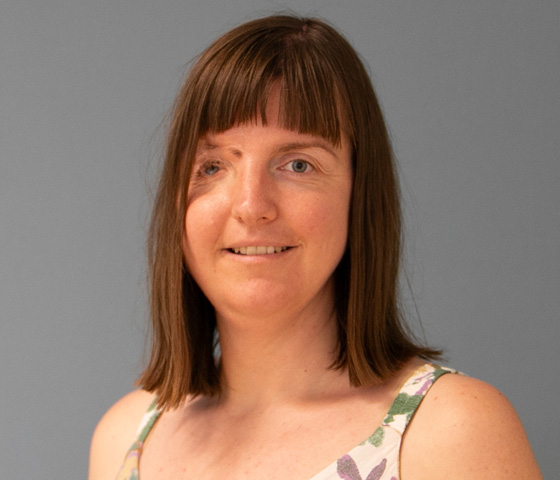
Lecturer, consultant and currently a doctoral student in the field of social work. In her professional practice, she has long been involved in project management, grant counselling and methodological support for volunteering in the non-profit sector. She has extensive experience in the preparation and implementation of projects, as well as in training coordinators and staff in the helping professions. She holds the NSK professional qualification as a Project Manager. Thanks to her current doctoral studies, she is able to sensitively adapt project principles to the specific needs of the academic environment and research activities.
Lecturer, consultant and currently a doctoral student in the field of social work. In her professional practice, she has long been involved in project management, grant counselling and methodological support for volunteering in the non-profit sector. She has extensive experience in the preparation and implementation of projects, as well as in training coordinators and staff in the helping professions. She holds the NSK professional qualification as a Project Manager. Thanks to her current doctoral studies, she is able to sensitively adapt project principles to the specific needs of the academic environment and research activities.
Annotation:
The aim of the course is to guide participants through the entire project life cycle – from a vague idea, through a concrete implementation plan, to lessons learnt. Participants will use their own model project – such as an interdisciplinary conference or another interdisciplinary project – to practise key project management tools, so that they can immediately begin managing projects in a structured manner, anticipate risks and lead their team effectively.
Time requirement:
17 hours (of which 9 are spent in class)
Number of participants:
min 3, max 12
Language of instruction:
Czech
Semester:
Winter
Course output:
a certificate of completion of a UO Doctoral School course
Enrolment:
course registration via a Microsoft Forms document, which will be posted on the website no later than one month before the course takes place
Date:
10 November 2026, 24 November 2026, 8 December 2026, 9:10-12:25 (Study Lounge, Českobratrská 16, Ostrava)
Updated: 12. 10. 2026

